Product Description
The Rhyno Windshield Cutter Laminated glass is a type of safety glass which utilizes two or more regular or specially strengthened glass sheets bonded together with a special plastic interlayer to form a clear, see-through barrier with enhanced impact and shatter resistance. Polyvinyl butyral (PVB) plastic is commonly used as the interlayer which enhances the glass further by increasing sound insulation and blocking nearly 99% of ultraviolet radiation. The interlayer maintains the layers of glass bonded even when broken, and the relative high strength of the interlayer prevents the glass from breaking up into large sharp pieces. This produces a characteristic “spider web” cracking pattern when the impact is not enough to completely pierce the laminated glass. Laminated glass is normally used when there is a possibility of human impact or where the glass could fall if shattered. Laminated glass is standard in automobile windshields and is routinely used in building curtain walls (a non-structural outer covering of a building), skylights, and prisons. More recently, laminated glass is used for blast and hurricane protection for windows. Automobile windshields are a clear, see-through wind barrier which provides impact resistance from insects, road debris, vandalism, etc., as well as roof crush resistance, airbag support, and resistance to occupant ejection. Windshields can become damaged during normal use and during vehicle crashes. When windshields fracture, the glass fragments are contained and occupant injury risk is minimized. Rear windows of automobiles are also constructed of glass laminates, as are about 10-30% of all passenger windows. By 2018, all vehicle windows will be required by United States Federal Regulations to be laminated.1 There are three main reasons for cutting laminated glass: 1) motor vehicle emergencies, 2) vehicle window replacement and 3) building window replacement. Motor Vehicle Regulations In March of 2011, the U.S. Code of Federal Regulations Title 49, Parts 571 and 585 were amended to mandate all U.S. motor vehicles alter airbag and/or side window design to minimize the risk of occupant ejection and states: SUMMARY: This final rule establishes a new Federal Motor Vehicle Safety Standard No. 226, “Ejection Mitigation,” to reduce the partial and complete ejection of vehicle occupants through side windows in crashes, particularly rollover crashes. The standard applies to the side windows next to the first three rows of seats, and to a portion of the cargo area behind the first or second rows, in motor vehicles with a gross vehicle weight rating (GVWR) of 4,536 kilogram (kg) or less (10,000 pounds (lb) or less)… And; The agency anticipates that manufacturers will meet the standard by modifying existing side impact air bag curtains, and possibly supplementing them with advanced glazing [emphasis added]…
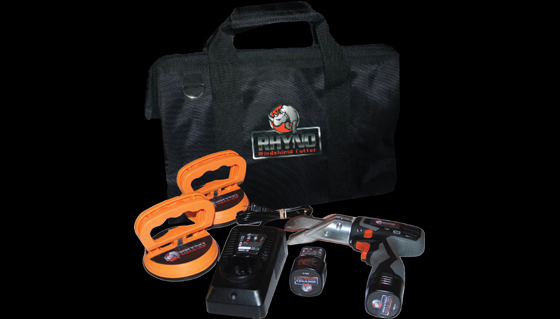
• Includes 14.4 V RHYNO Windshield Cutter tool
• 2 Lithium Ion batteries
• 30 minute Fast Charger
• 2 – Suction Lifters
• Cutter Blade Wrench
• Mini Halligan Bar
• Carrying case
Users’ Manual

Reviews
There are no reviews yet.